Humanitarian support has always played an important role in helping vulnerable communities overcome social and economic challenges. However sustainable development requires more than temporary assistance. Long-term improvement depends on empowering individuals, strengthening communities, and creating opportunities that allow people to build a more stable future.
Sustainable humanitarian aid focuses on creating lasting positive changes by combining immediate support with education, healthcare, social empowerment, and community development programs. Organizations such as Abshar Atefeha work to support families in need and contribute to stronger communities through organized charitable activities.
What Is Sustainable Humanitarian Aid?
Sustainable humanitarian aid refers to support programs designed to address both immediate needs and long-term challenges. Unlike short-term assistance that only responds to urgent situations, sustainable aid focuses on creating conditions where individuals and communities can become more independent.
Sustainable humanitarian programs often include:
- Supporting vulnerable families with essential resources
- Providing access to healthcare and social services
- Creating educational and skill development opportunities
- Strengthening community participation
- Helping individuals achieve greater independence
The main goal of sustainable humanitarian aid is not only to provide immediate relief but also to create stronger foundations for social development.
The Difference Between Short-Term Aid and Sustainable Support
Humanitarian assistance can take different forms. Emergency support is often necessary during difficult situations, but sustainable development requires programs that create long-lasting improvements.
| Type of Support | Main Purpose | Long-Term Impact |
|---|---|---|
| Emergency Assistance | Providing immediate help during difficult situations | Meeting urgent needs |
| Educational Programs | Increasing knowledge and skills | Creating better opportunities |
| Healthcare Support | Improving access to essential medical services | Building healthier communities |
| Community Empowerment | Strengthening independence and participation | Supporting sustainable social development |
How Community Empowerment Helps Reduce Poverty
Community empowerment is one of the most important elements of sustainable poverty reduction. When people have access to education, skills, healthcare, and social support, they gain more opportunities to improve their living conditions.
Creating Opportunities Through Education and Skills Development
Education and skill development can help individuals become more independent and improve their ability to participate in economic and social activities. Sustainable humanitarian programs often focus on providing opportunities that allow people to develop their abilities and create a more secure future.
Supporting Families and Vulnerable Groups
Families facing economic difficulties often need different types of support, including financial assistance, healthcare services, and social programs. Effective humanitarian organizations provide structured support that helps families overcome challenges while maintaining dignity and independence.
jpg.jpg)
The Role of NGOs in Sustainable Social Development
Non-governmental organizations (NGOs) play an important role in sustainable social development by connecting communities, donors, volunteers, and social programs. These organizations help identify community needs and create structured solutions to support vulnerable groups.
Unlike temporary assistance models, sustainable NGO programs focus on creating long-term improvements through empowerment, education, healthcare support, and social participation.
Strengthening Social Support Networks
Strong communities are built through cooperation and shared responsibility. NGOs help strengthen social networks by encouraging individuals, organizations, and donors to participate in programs that improve community welfare.
Improving Access to Essential Services
Access to healthcare, education, and social services is an important factor in reducing inequality. Humanitarian organizations help vulnerable communities receive essential support and improve their quality of life.
Healthcare support programs are one example of how charitable initiatives can create a positive impact. You can learn more about charity medical services and community healthcare programs provided for individuals and families who need assistance.
Sustainable Humanitarian Support in Iran
In Iran, humanitarian organizations contribute to supporting vulnerable communities through various social programs. These activities focus on providing assistance to families, improving access to essential resources, and encouraging public participation in charitable initiatives.
Sustainable humanitarian support requires cooperation between charitable organizations, communities, donors, and volunteers. When these groups work together, support programs can become more effective and create deeper social impact.
Moving From Assistance to Empowerment
The most effective humanitarian approaches focus on helping individuals develop the ability to improve their own circumstances. Empowerment programs can include education, skill development, family support, and access to social resources.
By supporting independence and participation, humanitarian organizations can help communities become stronger and more prepared to face future challenges.
Abshar Atefeha’s Approach to Community Empowerment
Abshar Atefeha focuses on supporting families in need and strengthening social responsibility through organized charitable activities. The organization works to connect community participation with humanitarian support and create opportunities for improving the quality of life for vulnerable groups.
Through cooperation between donors, volunteers, and communities, Abshar Atefeha contributes to creating a stronger support network for families who need assistance.
Supporting children and vulnerable families is an important part of humanitarian activities. You can learn more about how donations support vulnerable children and families and contribute to meaningful social changes.
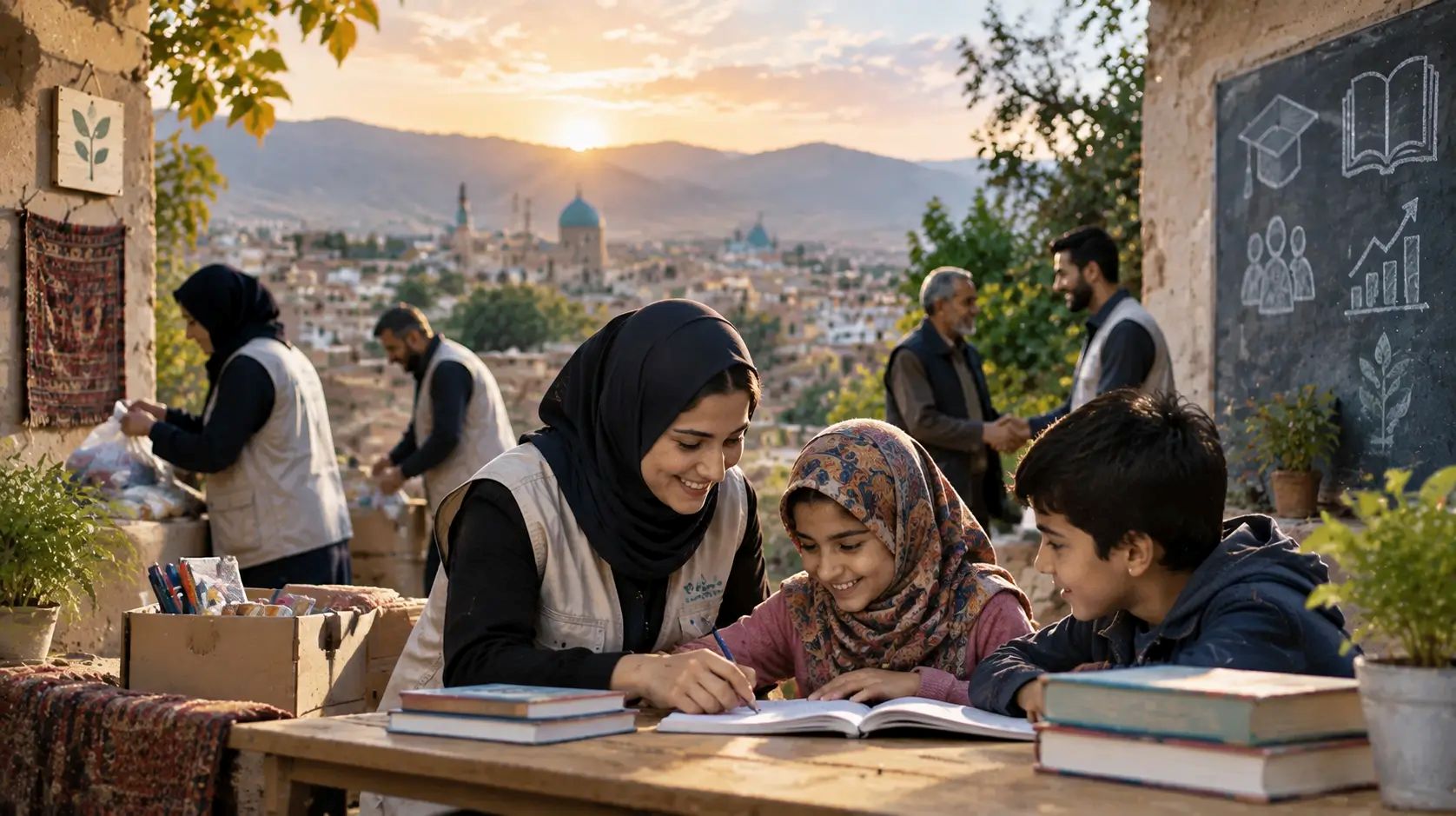
The Importance of Community Participation in Sustainable Development
Community participation is one of the foundations of sustainable development. When people actively participate in charitable programs, they help create stronger connections and more effective support systems.
- Individuals: Can contribute through donations, volunteering, and raising awareness.
- Businesses: Can support communities through social responsibility programs and partnerships.
- Organizations: Can create coordinated solutions for social challenges.
- Volunteers: Can provide skills, knowledge, and time to support humanitarian initiatives.
How Individuals and Organizations Can Support Sustainable Programs
Supporting sustainable humanitarian programs does not always require large contributions. Small actions, when combined with collective participation, can create meaningful social change.
- Financial Support: Providing donations that help continue humanitarian programs.
- Volunteering: Sharing professional skills and personal abilities with communities in need.
- Awareness: Introducing reliable charitable organizations to more people.
- Partnerships: Businesses and institutions can cooperate with NGOs to expand social impact.
Support Sustainable Community Development
Support Abshar Atefeha Humanitarian Programs
Sustainable humanitarian support can create lasting changes in communities by improving access to essential resources, strengthening social connections, and empowering families to build a better future.
Your participation can help support vulnerable groups and contribute to programs focused on social development, community support, and humanitarian assistance.
Whether through donations, volunteering, or sharing awareness, every contribution can help create a positive impact.
Learn More About Abshar Atefehajpg.jpg)
Frequently Asked Questions (FAQ)
What is sustainable humanitarian aid?
Sustainable humanitarian aid refers to support programs that address immediate needs while also creating long-term opportunities through education, healthcare, empowerment, and community development.
How does community empowerment help reduce poverty?
Community empowerment helps reduce poverty by improving access to education, skills, social resources, and opportunities that allow individuals and families to become more independent.
Why are NGOs important for sustainable development?
NGOs help sustainable development by supporting vulnerable groups, improving access to essential services, encouraging participation, and creating stronger communities.
How can individuals support humanitarian programs?
Individuals can support humanitarian programs through donations, volunteering, sharing awareness, and participating in community initiatives.
What is the role of Abshar Atefeha in supporting communities?
Abshar Atefeha supports vulnerable families through organized charitable activities and encourages cooperation between donors, volunteers, and communities to create meaningful social impact.
Conclusion
Sustainable humanitarian aid is an important approach to building stronger communities and reducing social challenges. By focusing on empowerment, education, healthcare support, and community participation, humanitarian organizations can create long-term positive changes.
The experience of Abshar Atefeha demonstrates how organized charitable activities can connect individuals, donors, and communities to support vulnerable groups and promote social development.
Creating a more sustainable future requires cooperation between people, organizations, and communities. Through responsible participation and continued support, humanitarian programs can help build stronger societies where individuals have greater opportunities for a better quality of life.